
Why Google Business Profile Categories Matter to Trust
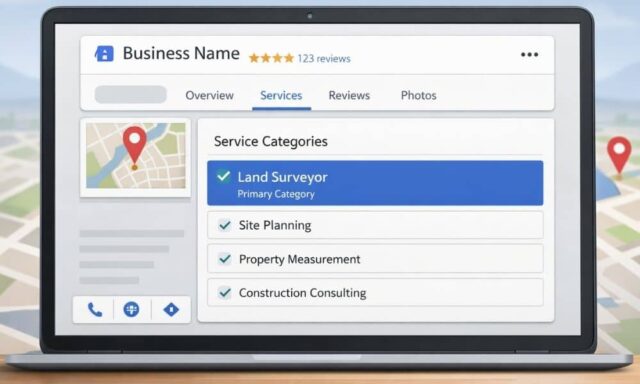
Service categories inside a Google Business Profile are often treated as a small setup detail. In reality, they are one of the strongest trust signals Google and AI systems use. They help Google understand what a business does and where it belongs. When categories are misaligned or overloaded, Google struggles to see a clear identity. This uncertainty affects how often a business appears and where it shows up in local search results.
This issue is not about choosing the “right” keywords. It is about clarity. Google looks for one clear and stable way to understand a business. Service categories are one of the first places it looks for that understanding.
Why One Primary Category Matters Most
Google does not treat all categories the same. One category becomes the main signal that defines the business. This primary category tells Google what service the business provides most often and what searches it should appear for. When this category is unclear or changes often, Google’s confidence drops.
For service-based businesses, Google expects a clear sense of purpose. When someone searches for a professional land surveyor, Google wants to see a business that presents itself consistently as that service. If a land surveying company shifts between multiple primary categories or tries to represent unrelated work, the signals become less reliable. Over time, that loss of clarity weakens local relevance tied to the business location.
How Too Many Categories Create Conflict
Secondary categories are meant to support the primary category. They are not meant to compete with it. When too many categories are added, Google receives mixed signals. The same happens when categories describe loosely related services. Instead of helping visibility, this often causes dilution.
From Google’s point of view, a profile that lists many services looks more like a general business. It looks less like a specialist. In local search, general businesses rarely perform well. Google prefers businesses that clearly match one main service and one clear place.
Why Category and Website Alignment Matters
Google does not judge a profile on its own. It compares category information with the business website. This helps Google confirm consistency. If a profile lists certain services but the website focuses on different wording, Google becomes unsure.
This matters more now because AI systems depend on clear signals. When service language, location references, and category signals match, the business is easier for AI to understand. It is also easier to recommend. When they do not match, Google may lower visibility to avoid showing an unclear result.
Why Stability Builds Trust
Changing categories too often can signal instability. Even changes made with good intent can suggest uncertainty. Over time, stable category use strengthens business identity. It also reinforces geographic relevance.
For businesses in competitive local markets like Pembroke Pines, steady signals matter more than frequent changes.
Conclusion
Service categories are not a tool for expanding reach. They are a structural signal. They help Google and AI systems understand a business’s role in the local market. Clear focus, consistency, and alignment build trust. Keeping that structure in place over time often comes down to how a business approaches its local marketing strategy for service businesses, making sure the same signals are reinforced across profiles, websites, and real service areas. When trust is strong, visibility follows naturally.
