Welcome to AuburnBusiness.com. We are a professional online marketing company for local business. We help local businesses get found in their local market by using search engine optimization strategies that produce high search engine results. Our goal is for our client to have multiple listings on the front page of Google for their main keywords.
With more than 35 years of business experience, our team has helped multiple companies to achieve first page search engine ranking results. We want to help you get your local business online – where the $Money$ is.
Why Land Surveyors MUST Be Online
Keith works with only one local surveyor per city or town. No city is too small for internet marketing. If you have more than 2 competitors, you need to be found on Google ahead of them, preferably in 1st place. Call Keith Today at (334) 826-6677.
Local Proof turns online visibility into real customers by giving people the confidence to choose a business. Getting found online is an important part of local business marketing, but visibility alone does not guarantee new customers. People may visit a website, view a business profile, or read a social media post without taking the next step.
The missing piece often comes down to trust.
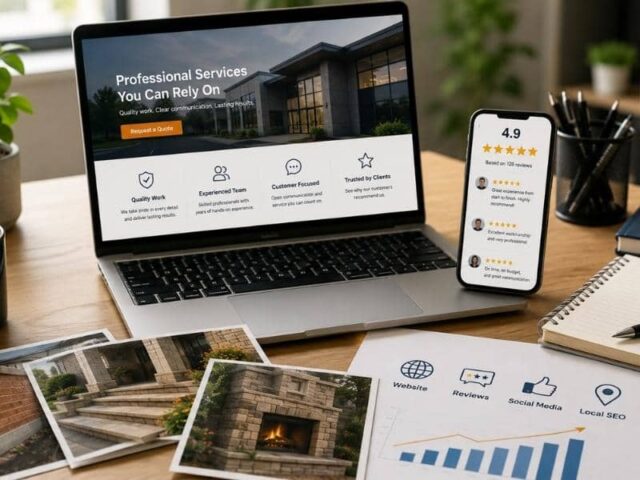
Customers want proof that a business can solve their problem and provide dependable service. Effective online marketing helps present that proof by highlighting customer reviews, project photos, and detailed service information, making it easier for potential customers to trust the business and take the next step.
Visibility Gets Attention, but Proof Builds Trust
Search engines, directories, and social media can introduce a business to potential customers. However, being visible only creates an opportunity. The customer still needs a reason to call, submit a form, or request more information.
Visitors often ask several questions when they reach a website. They want to know whether the company has experience, whether it offers the right service, and whether past customers received good results.
General claims rarely provide enough confidence. Statements such as “We offer excellent service” or “Customer satisfaction is our priority” appear on many websites. Without evidence, these phrases can feel empty.
Local proof supports those claims with real examples. It shows what the company has completed, how it works, and what customers can expect. This makes the business feel more established and dependable.
A strong website may include:
Recent customer reviews
Original project photos
Clear service descriptions
Short examples of completed work
Each item helps reduce doubt and gives the customer a reason to continue exploring the site.
Reviews and Project Photos Reduce Customer Doubt
Reviews remain one of the strongest forms of business proof. They allow potential customers to learn from people who have already used the company.
The most helpful reviews include details. A customer may describe the original problem, the service provided, and the final result. Reviews may also mention communication, timing, professionalism, or cleanliness. Businesses should make these comments easy to find. Selected reviews can appear on the homepage, service pages, and contact page. Companies should also respond to feedback in a calm and professional manner.
Original photos provide another layer of proof. Stock images may improve a website’s appearance, but they do not show that the company has completed real work. Before-and-after photos work well because they allow visitors to see a clear change. A short caption can explain what the customer needed and how the business solved the problem.
Photos can also show the work process. A company might present the preparation stage, work in progress, and the completed result. This gives potential customers a better idea of what to expect.
Real photos do not need to look perfect. Clear and honest images from actual projects often feel more trustworthy than polished stock photography.
Clear Service Information Shows Real Expertise
Customers may leave a website when they cannot quickly understand what the business provides. Vague service pages force visitors to guess whether the company can meet their needs.
A strong service page explains the work in simple language. It describes common customer problems, available solutions, and expected results. It may also explain the materials, time frame, or factors that affect the service.
Clear information shows that the business understands its field. It also helps customers prepare better questions before making contact.
Each service page should answer three basic questions:
What problem does the service solve?
How does the business handle the work?
What result can the customer expect?
Businesses should avoid filling these pages with long sales messages. Customers usually want useful information before promotional language.
Specific details also support search visibility. Search engines can better understand a business when its website clearly explains each service. Customers also feel more confident when the content matches their exact needs.
How Masonry Businesses Can Show Strong Proof
Masonry companies have many opportunities to use local proof because their work creates visible results. Customers may need help with cracked mortar, damaged brick, worn steps, leaning walls, aging chimneys, or damaged stonework.
Before-and-after photos can show how a repair improved both the appearance and strength of a structure. Captions can explain whether the contractor completed tuckpointing, brick replacement, chimney repair, wall restoration, or another masonry service.
Short project stories can provide more context. For example, a masonry contractor might explain that damaged mortar joints allowed moisture to enter a wall. The company can then describe how the crew removed weak material, selected suitable replacement mortar, and completed the repair.
These stories show knowledge without overwhelming the reader with technical terms.
A masonry company can also build trust by discussing common customer concerns. Helpful topics may include:
Why matching mortar matters
What causes cracks to return
How drainage affects brickwork
When a repair may prevent larger damage
Reviews can support the same message. Comments about careful color matching, clean work areas, clear communication, and lasting repairs help future customers understand the quality of the service.
By combining real photos, clear explanations, and customer feedback, a masonry company can make its experience easier to see.
Frequently Asked Questions
What is local proof in local business marketing?
Local proof is evidence that shows a business has real experience and satisfied customers. It may include reviews, project photos, customer stories, service details, and examples of completed work.
How often should a business update its proof?
A business should update its website whenever it completes a strong project, receives a useful review, changes a service, or adds new team information. Regular updates help the company appear active and dependable.
Can local proof help turn website visitors into leads?
Yes. Proof reduces doubt and helps visitors understand what the business does. Reviews, photos, and clear service details can give potential customers more confidence to call, send a message, or request information.