
The Real Reason Service Businesses Lose Local Visibility
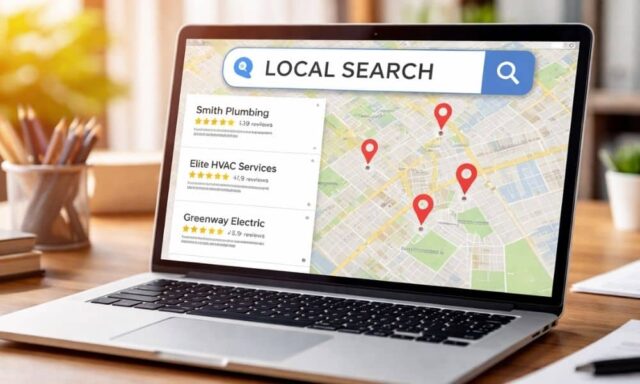
Many service businesses in McKinney, Alabama think online visibility is just a website problem. In many cases, it is an interpretation problem instead. Search engines try to match what a resident searches for with the best nearby provider. If business details, service descriptions, and location signals are unclear or inconsistent, even good companies can stay low in results. This happens often in high-intent searches where map listings get most of the attention.
Search systems are not only reading your website. They are also comparing your public details across many places. When the information does not line up, visibility becomes unstable.
How Search Engines Read Local Intent in McKinney
Local searches in McKinney usually follow a few intent patterns. Some people search because they need fast help. Others are planning a project and comparing options. Some are learning before they hire. Others search for a business name with the city attached.
Problems start when a business describes services using internal terms instead of the words residents actually use. That mismatch lowers relevance signals. If service descriptions are too broad, repeated across pages, or missing local context, search engines cannot clearly connect the business to specific needs. Rankings can drop because of classification confusion, not just competition.
Search engines try to label each business by service type and service area. If your pages do not clearly support that label, your visibility becomes weaker even if your work quality is strong.
The Trust Signals That Shape Local Visibility
Local SEO depends on trust signals that work together. Search engines look for proof that a business is real, active, and locally relevant. They compare your business name, contact details, service categories, and service area mentions across platforms and pages.
They also review how clearly your service pages explain the work you actually do. Generic text creates weak signals. Specific service explanations create stronger ones. Fresh updates, real photos, and accurate details also help confirm that a business is active.
When these signals agree with each other, search confidence grows. When they conflict, rankings often shift or stall. This is why two businesses with similar websites can perform very differently in local results.
When properly structured, even a specialized contractor category—such as a masonry services page focused on McKinney—can gain steady visibility when the service meaning, location signals, and supporting proof match how people search. The gain comes from clarity, not from the trade itself.
Stability Comes From Clear Local Signals
In McKinney, steady local search visibility comes from reducing confusion across all public business signals. Companies that describe services in customer language, keep identity details consistent, and build pages around real service situations are easier for search engines to verify.
Local visibility is not built on tricks. It is built on alignment and clarity. When search systems can quickly confirm what a business does, where it works, and who it serves, rankings become more stable over time.
