
Why Real Surveying Experience Beats Generic Advice
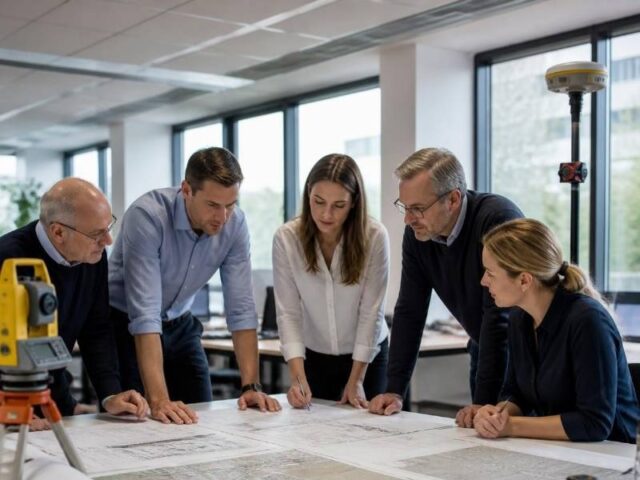
Anyone can post a list of survey tips. Most of it sounds the same. It’s clean, safe, and forgettable. What you can’t fake is time in the field. Real projects teach lessons that no template ever will. This article explains why experience-based guidance is worth more to you, and how a firm’s real work shows up as content you can trust. It also shows what to look for when you judge who to hire. The goal is simple. Help you tell real expertise from empty words before you spend a dollar.
Why Real-World Experience Is a Stronger Content Asset Than Generic Advice
Generic advice is written from the outside looking in. It repeats what everyone else already said. It rarely warns you about the problem that shows up on a real job. That’s the gap between reading about surveying and doing it.
Real experience fills that gap. A surveyor who has walked hundreds of sites knows where trouble hides. They’ve seen the corner marker that didn’t match the deed. They’ve found the easement that changed a whole site plan. Those lessons come from work, not from a search result.
For you, that difference is money and time. Advice built on real jobs helps you avoid the mistakes that stall a closing or a permit. It tells you what to check before you buy, build, or divide land. Generic tips can’t do that with the same care.
Experience also shows in the details. A guide written from real work names the exact step that trips people up. It gives you a clear action, not a vague idea. It points to the paper you’ll need and the question you should ask first. That kind of help is hard to find and easy to trust.
Compare two guides on the same topic and the gap is clear. One lists broad ideas anyone could write. The other walks you through a real decision step by step. The second one came from doing the work, and it reads that way.
How Everyday Client Problems Can Become Valuable Content
Every project brings a question a client didn’t expect. Where does my property really end? Why does the lender want a different survey? Can I put a fence here? These questions repeat across many jobs.
Those repeat questions are a map of what people need to know. A good firm listens and turns them into clear answers. The problem one client faced this month helps the next ten clients avoid it. That’s how real work becomes useful reading.
This kind of content solves a problem before you call. You find the answer to your worry in plain words. You learn what to ask, what to confirm, and what to prepare. By the time you reach out, you already understand the basics.
It also keeps the advice honest. Content built from real client problems stays close to the ground. It doesn’t drift into theory or filler. It stays on the questions that matter to people planning real property decisions. That focus is what makes it worth your time.
Turning Project Lessons Into Evidence of Expertise
Talk is cheap in any trade. What sets a firm apart is proof. Project lessons are that proof, shared in a way that helps you. Each one shows the work behind the words.
A strong lesson explains a real situation without dressing it up. Maybe a boundary survey found an old fence sitting three feet over the line. Maybe a topographic survey caught a drainage problem before grading began. Those stories teach a point you can use on your own site.
Here’s what good project-based content usually shows you.
- The problem the site presented at the start.
- The step the surveyor took to find the real answer.
- The result, and what it saved the owner in time or cost.
You learn something from each one. You also see how the firm thinks and works. That’s more convincing than any claim about being the best. It lets the work speak for itself, which is what earns real trust.
These lessons also protect you from bad assumptions. You see that a clean-looking lot can still hide a boundary issue. You learn that a flat site can still have a drainage flaw. That awareness helps you ask better questions on your own project.
Using Local Experience to Build Trust With the Right Audience
Land is local. Soil, drainage, flood maps, and permit steps change from one area to the next. A firm that works an area learns its patterns. That knowledge is hard to copy from far away.
Local experience shows up in the advice a firm gives. It knows which lots tend to sit in a flood zone. It knows the drainage that catches builders off guard. It knows how the local process tends to run, though rules can vary by county, municipality, and project type, so those should always be confirmed early.
This is how trust gets built with the right people. Property owners want someone who knows their kind of land. Developers want a partner who has solved their kind of problem before. Content that reflects real local work speaks straight to those readers.
It also filters for fit. The people who need that exact knowledge are the ones who reach out. That makes for better projects on both sides. You get a firm that already understands your ground, and they get work they know how to do well. Everyone starts the job with fewer surprises.
How Consistent Expert Content Becomes Long-Term Digital Authority
One good article helps a few readers. A steady stream of them builds something bigger. Over time, a firm that keeps sharing real lessons becomes a place people return to. That standing is earned, not bought.
Search engines notice this pattern too. They favor sites that cover a topic with depth and care. When a firm answers the real questions people ask, its pages start to rank. More readers find it, and more of them turn into clients.
The key word is consistent. Authority doesn’t come from one burst of posts. It comes from showing up again and again with content that helps. Each useful piece adds to the last and builds a record of real knowledge. A single article can fade, but a deep library keeps working for years.
For you, that record is a shortcut to trust. You can read a firm’s work and judge it for yourself. You can see whether it knows your kind of project before you ever call. Timing still matters, so confirm your survey needs early when a closing, permit, or build depends on it.
